
What do you think the first bridge looked like? If you said a log or tree trunk across a river, youre probably right. Thats what the experts think. People might also have crossed a stream in early times by stretching a few vines across it. They could walk on the lower vines and hold onto the top vines for balance. These bridges wouldnt have lasted long. A raging river could carry away a log bridge. Vines could rot or break. Bridges nowadays are much stronger.
WHAT DO BRIDGES DO?
Bridges can cross water. Some bridges over water move to let boats through. Others are high enough that boats can pass beneath. Bridges also cross valleys, ravines, railroad tracks, roads, and other things that block the way. Some bridges carry cars and trucks. Some bridges carry trains. Some carry only people on foot. Some carry water. Bridges that carry water are called aqueducts. Modern bridges are marvels of construction. They can span long distances and carry heavy traffic without collapsing. Yet they appear to float in the air.
WHAT ARE BRIDGES MADE OF?
Bridges can be made of many materials. Early bridges were made of wood or stone. Many wooden bridges were covered to protect them from snow and rain so they would last longer. Stone was much stronger than wood. Many stone bridges built nearly 2,000 years ago by the ancient Romans still stand today. The Romans built their largest bridges to supply water to towns and cities. Aqueducts marched across valleys and plains over much of Europe.
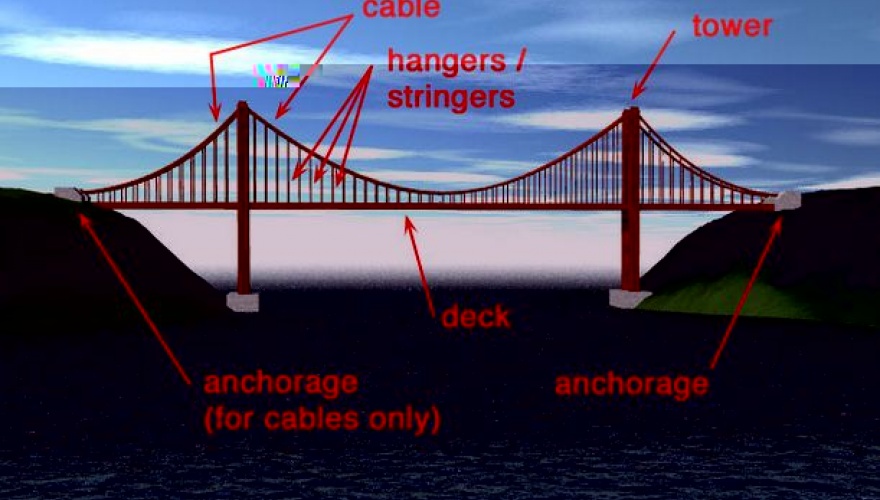
Stone bridges were strong enough to carry all traffic until the railroad came along in the 1800s. Builders then began to use iron and steel. Steel and concrete are the major materials used today for building bridges. Before steel became available in the 1800s, most bridges were arch bridges made of stone. An arch looks somewhat like the letter n. Steel made it possible to build much longer and stronger bridges called suspension bridges
This article was culled from the publications of Deen Communication Limited