
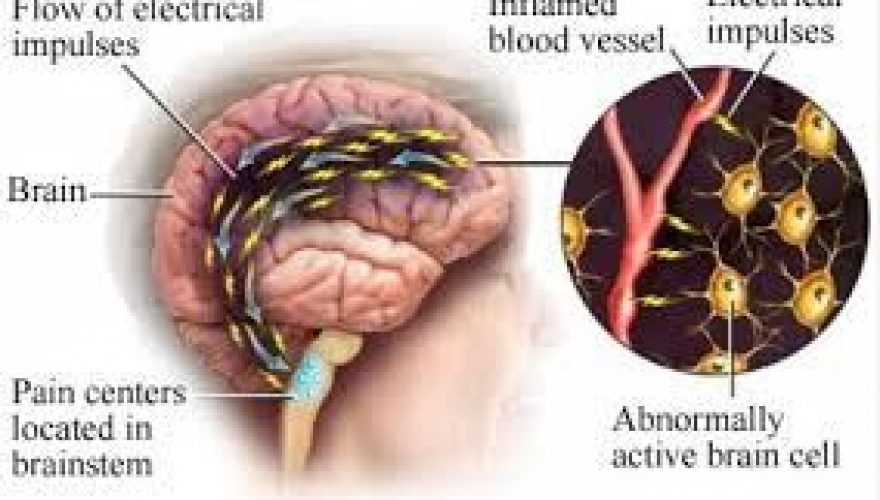
Headache can be defined as pain in any part of the head. There are many types of headache. In this edition we shall be looking at the type known as Migraine. Migraine is a severe headache which frequently occurs over one side of the head only. It is characterized by throbbing and associated with one or more of the following symptoms: sensitivity to light, nausea and vomiting, and dizziness.
Flashes or patterns before the eyes may precede the headache. Women are twice as likely as men to experience these headaches, and some evidence suggests that migraine headaches are inherited. They can recur at intervals ranging from one day to several years. At the onset of a migraine headache, blood vessels within the head constrict. This may cause a decrease in blood flow to the surface of the brain. Dilation (expansion) of blood vessels of the head and scalp then occurs, setting off a chain of reactions that result in the headache. Evidence indicates that decreased localized brain metabolism (series of chemical interactions taking place in living organisms) initiates the attack and that the initial decrease in blood flow is a response to the lowered metabolic demand, rather than due to constriction of blood vessels.
Among the biochemical changes associated with migraine is a reduced level of enkephalins, the brains pain relieving chemicals. Hormone-level changes (such as those experienced by women during menopause or menstruation), endocrine imbalances, and stress are considered precipitating factors of migraine headaches in susceptible individuals. Several treatments have been successful in helping migraine sufferers.
These include medications such as ergotamine tartrate, which thwarts the excessive expansion of blood vessels and aborts the acute attack; and propranolol, which stabilizes blood-vessel tone and prevents subsequent attacks. Biofeedback technique have also proved useful. Treatment: Preventive Treatment: individualized based on severity and frequency of headache
1. Goal of treatment: to limit headaches to 3 per month
2. Avoid headache risk factors: * get plenty of sleep * avoid dietary triggers * reduce stress or learn new techniques to relieve stress, such as biofeedback * eat at regular times and do not skip breakfast * keep a headache diary to identify risk factors and monitor treatment outcomes
Acute Treatment: 1. Goal: to safely and completely stop the migraine attack within 2-4 hours while preserving the ability to function.
2. Acute medication, such as many over the counter medications, is appropriate for treatment of headache if complete relief from the headache is obtained in 2-4 hours, but their use must be limited to 2 days or less per week to avoid developing analgesic rebound/medication overuse headache.
3. Prescription medication are used for severe headache and when response to over the counter
This article was culled from the publications of Deen Communication Limited