
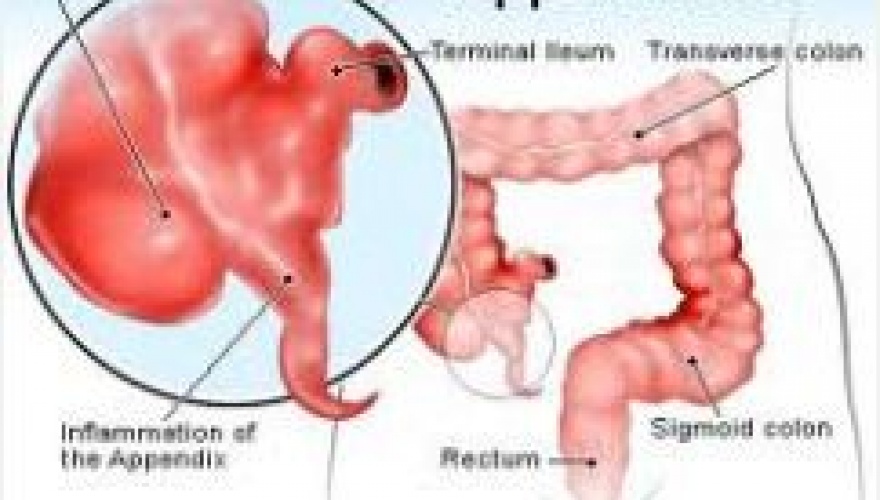
The appendix is a narrow, muscular tube that is closed at one end and is attached to and opens into the cecum its other end. (The cecum is the pouch like beginning of the large intestine; the small intestine empties into the cecum.) The vermiform appendix exists only in human beings and higher apes. The appendix does not serve any useful purpose as adigestive organ in humans.
The appendix is usually 8 to 10 cm (3 to 4 inches) long and less than 1.3 cm (0.5 inch) wide. The cavity (a hole or hollow place) of the appendix is much narrower where it joins the cecum . than it is at its closed end. The appendix has muscular walls that are ordinarily capable of expelling into the cecum; the mucous secretions of the appendiceal walls or any of the intestinal contents that have worked their way into the structure.
If anything blocks the opening of the appendix, or prevents it from expelling its contents into the cecum, appendicitis may occur. The most common obstruction in the opening is a hardened piece of fecal matter (fecalith). Swelling of the lining of the appendiceal walls themselves can also block the opening. When the appendix is prevented from emptying itself, a series of things happens. Fluids and its own mucous secretions collect in the appendix, leading to an abnormal collection of serous fluid between tissue cells (edema), swelling, and the expansion of the appendix.
As the expansion increases, the blood vessels of the appendix become closed off, causing the death of appendiceal tissue. Meanwhile, the bacteria normally found in this part of the intestine begin to spread in the closed-off pocket, making the inflammation worse. The appendix, weakened by the death of appendicial tissue and subject to increasing pressure from within by the swelling, may burst, spilling its contents into the abdomen and infecting the membranes (a thin and flexible sheet) that line the cavity and cover the abdominal organs. Fortunately peritonitis (inflation of the membrane that lines the abdomen) is usually prevented by the protective mechanisms of the body. Symptoms.
A person experiencing an attack of appendicitis may feel pain all over the abdomen or only in the upper abdomen or about the navel. This pain is usually not very severe. After one to six hours or more, the pain may become localized to the right lower abdomen. Nausea and vomiting may develop some time after the onset of the pain. Fever is usually present but is rarely high in the early phases of the attack. The patients white blood cells are usually increased from a normal count of 5,000-10,000 in an adult to an abnormal count of 12,000-20,000; this can be caused by many other acute inflammatory conditions that occur in the abdomen. Treatment. The basic treatment of appendicitis is the surgical removal of the appendix in a minor operation called an appendectomy.
The operation itself requires little more than a half hour to carry out under anesthesia (medically induced insensitivity to pain) and produces relatively little postoperative discomfort. If a diagnosis of acute appendicitis cannot immediately be made with reasonable certainty, it is now customary to wait and observe the patients symptoms for a period from 10 to 24 hours so that a clear diagnosis can be made. This wait slightly increase the risk that the appendix will rupture and peritonitis set in, so the patient is kept under close medical watch at this time.
This article was culled from the publications of Deen Communication Limited